
Music is messy. Beautiful, messy, layered sound. A recording captures notes, yes, but also feeling, timing, subtle interaction between instruments. Translating that into written form—lyrics, sheet music, structured tracks—has always been tricky. Hours of replaying, pausing, rewinding, scribbling notes. Sometimes you think you’ve got it all, then realize a tiny vocal inflection is off. Or a quiet drum fill. That little thing changes the feel.
And it’s exhausting.
Artists spent so much time on transcription that creativity often stalled. Songs left unfinished not because of lack of ideas but because the technical labor was overwhelming. It’s not just about precision. It’s about momentum. Ideas need space to grow.
Now AI transcription is changing the landscape.
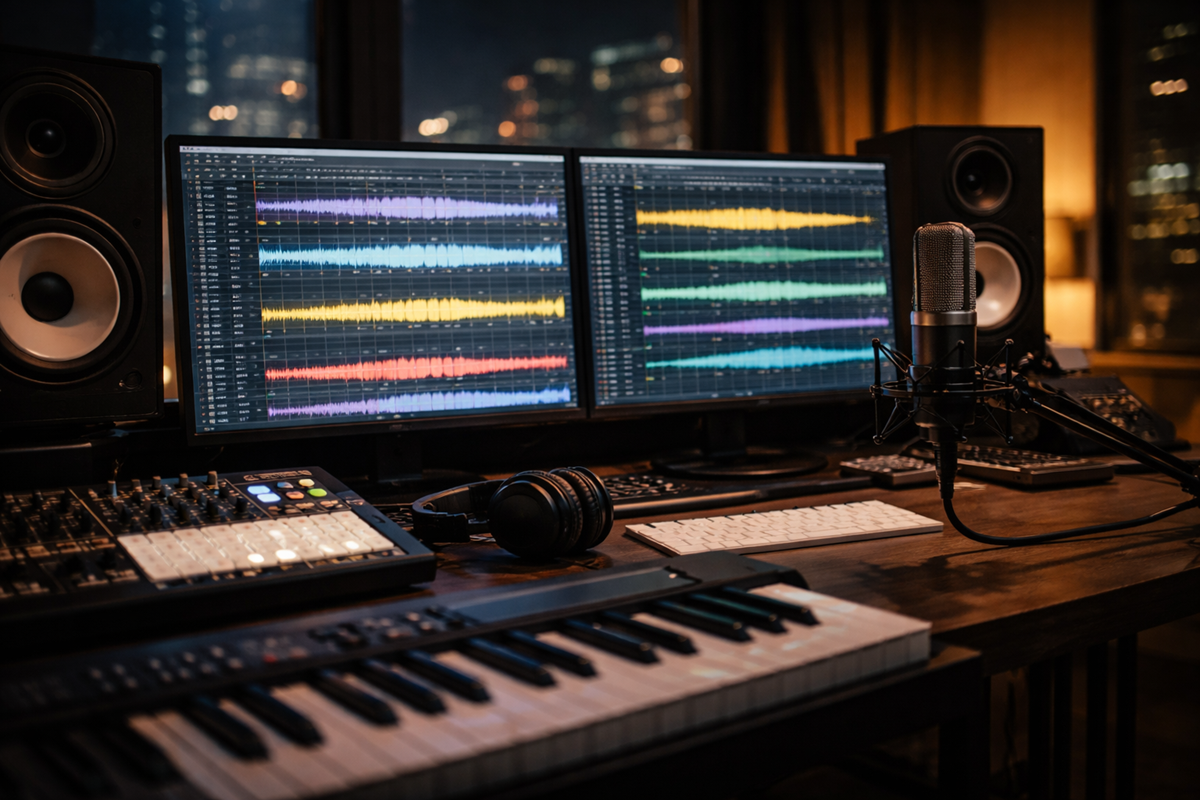
Tools can analyze recordings in minutes. Instruments separated, vocals captured as text, rhythms mapped. The tedious, repetitive work disappears. Suddenly, musicians can focus on shaping the music instead of chasing it.
Patterns emerge when the song is laid out. Harmonies you didn’t notice before become obvious. Subtle rhythms once buried in the mix pop out. The recording turns into a playground. You start seeing possibilities you might have missed in the raw audio.
Less Repetition, More Insight
Manual transcription? Endless repetition. Listen. Pause. Note. Rewind. Play again. And still, errors happen. A soft cymbal, a bass line hiding beneath a chord, a backing vocal in the distance.
AI handles that. Separates instruments. Detects pitch. Converts lyrics. With this AI music to lyrics service, you get a usable transcription almost instantly. Editable. Accurate.
Imagine a jazz ensemble. Drums, bass, piano, a horn section. All transcribed with subtlety intact. Hours of tedious listening replaced with clarity. And that changes how you approach creativity.
It’s not about removing artistry. It’s about freeing it.
Creativity Opens Up
Once a transcription exists, experimentation becomes second nature. Rearrange sections. Layer harmonies. Swap instruments. Adjust rhythms. A piano riff from a classical piece? Suddenly, it can become the backbone of a pop song. Or a synth pattern in electronic music. The possibilities grow.
Sometimes it’s small: noticing repeated phrases, hidden motifs, rhythmic quirks. Sometimes it’s large: reimagining the whole track. AI provides the foundation. The choices remain human.
Collaboration, Reimagined
Bands across cities can now work together effortlessly. Share a transcription. Everyone sees the same structure. No misheard notes. No guessing who plays what.
Producers, lyricists, instrumentalists—all on the same page. A songwriter in Berlin, a drummer in New York, a producer in Tokyo. Collaboration becomes fluid.
And it’s not just for pros. Students, hobbyists, anyone with musical ideas can engage. The technical barrier is lower. Creativity becomes more inclusive.
Studio Time, Maximized
In studios, efficiency matters. Accurate transcriptions mean musicians dive straight into performance. Producers plan sessions effectively. Editors can make post-production faster.
Plus, documentation matters for licensing and royalties. Misheard lyrics or unclear arrangements can slow payment. AI transcription reduces mistakes, protecting both creative and financial integrity.
A Partner, Not a Replacement
AI doesn’t replace musicians. It doesn’t choose phrasing, style, or emotion. Humans still decide dynamics, harmonies, interactions. The AI handles repetitive, technical work.
And that makes workflow smoother. Ideas flow faster. Songs evolve more naturally. Musicians focus on expression, not reconstruction.
Expanding Possibilities
AI also encourages cross-genre exploration. Jazz rhythms inspire pop beats. Classical piano riffs become electronic backbones. Transcriptions capture the details, making experimentation reliable.
Remixers and DJs can analyze old recordings fully. Every instrument, rhythm, vocal nuance visible. Insight without restriction. Creativity flourishes.
Education and Preservation
Students gain insight into complex arrangements. Observe how rhythms interlock, how melodies progress, how harmonies evolve. Practice becomes precise.
Archivists preserve rare performances. Future generations access every nuance. A live concert or historical recording, fully documented. Every detail captured.
The Human Touch
Here’s the point: AI handles the tedious. Humans make the choices. Rearranging, harmonizing, experimenting, interpreting. AI frees up time. It amplifies artistry. It doesn’t replace it.
You notice things you hadn’t before. And that’s the point, really. Music becomes a conversation between human creativity and technological support.
It’s subtle, but important.
Songs evolve faster. Collaboration improves. Musicians focus on what matters: making music. AI transcription is not the creator. It is the enabler.
And that changes everything.